AMERICAN FORK CANYON, Utah – The rugged, beautiful landscape of American Fork Canyon has hidden many secrets over the years, but none as haunting as the fate of Laura Ann Aime. On Halloween night 1974, the 17-year-old left a party to walk to a convenience store. She never returned. A month later, hikers found her body on the side of a canyon road – tied, beaten, and stripped of her clothing. Evidence suggested she had been kept alive for days, enduring unspeakable torment. For 51 years, her murder remained unsolved, though suspicion always pointed to one man: Ted Bundy, the charismatic serial killer who terrorized the United States in the 1970s. On Wednesday, April 1, 2026, the Utah County Sheriff’s Office made it official. Using cutting-edge DNA technology, they proved beyond any doubt that Bundy was the killer.
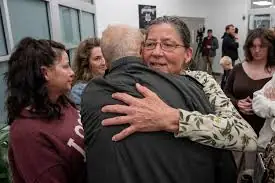
At a press conference held in Spanish Fork, Sheriff Mike Smith stood before a bank of microphones alongside Laura’s sister, Michelle Impala, and Brent Bullock, one of the original investigators on the case. The mood was somber but resolute. “New DNA testing has irrefutably confirmed that DNA evidence recovered from Laura’s body matched Ted Bundy,” Smith announced. The room fell silent, then erupted in quiet gasps. Impala hugged Bullock, tears streaming down her face. “We always knew in our hearts it was him,” Impala said later. “But to have it proven, after all these years… it’s a lot to process.”
The scientific breakthrough was made possible by advances in forensic genetics that didn’t exist even a decade ago. Investigators had preserved evidence from Laura’s case – including clothing, trace fibers, and biological samples – in climate-controlled storage. New techniques allowed them to extract minute amounts of nuclear DNA, which was then compared to Bundy’s known genetic profile (obtained from a blood sample taken during his Florida trial). The match was statistically overwhelming. “The probability of it being anyone else is effectively zero,” said a forensic analyst who worked on the case. “Ted Bundy killed Laura Ann Aime.”
Bundy, who was executed in Florida’s electric chair in 1989, had confessed to Laura’s murder verbally but never provided details. At the time, law enforcement believed him but couldn’t close the case without corroborating evidence. “He was a liar and a manipulator,” Bullock said. “We needed science to confirm his words.” Now, science has spoken. Sheriff Smith noted that if Bundy were alive, prosecutors would seek the death penalty. “He took Laura’s life in the most brutal way imaginable. He deserves to face justice, but since he’s already dead, we close this case for Laura and her family.”
The announcement has drawn national attention, reopening wounds for families of other Bundy victims. Between 1974 and 1978, Bundy murdered at least 30 young women across the Pacific Northwest, Utah, Colorado, and Florida. He was known for his charm, his intelligence, and his ability to escape custody – twice. His trial in Florida for the murder of 12-year-old Kimberly Leach and two sorority sisters was a media sensation. Despite his execution, new victims continue to be identified as DNA technology improves. Laura Ann Aime now joins that tragic list.
But for Michelle Impala, the focus is not on Bundy’s infamy but on her sister’s memory. “Laura was not just a victim. She was a person. She loved horses, she loved to laugh, she had a bright future,” Impala said. “I hope people remember her name, not his.” The Sheriff’s Office echoed that sentiment. “This case is closed, but Laura’s story lives on,” Smith said. “We will never forget her.” For the Aime family, the long nightmare is finally over. The canyon has given up its secret, and justice – delayed for half a century – has finally arrived.